

Quick Answer: What to Expect in a 90 Day Rehab (Days 31-90)?
- Days 30–45: The “Pink Cloud” phase peaks, then lifts — triggering the first major relapse risk window as euphoria gives way to emotional reality.
- Days 45–60: Post-Acute Withdrawal Syndrome (PAWS) peaks for many substances — cognitive fog, mood instability, and unpredictable cravings are neurologically driven, not signs of failure.
- Days 60–90: Acute biological crisis passes; the central task shifts to building a recovery identity, a daily structure, and a peer support network strong enough to survive the first year.
- The goal: Survive the Pink Cloud crash, manage PAWS with clinical support, and build the identity and structure that make day 91 possible.
- The evidence: Most people need a minimum of 90 days of treatment — not 30. Step-down care (PHP → IOP → Outpatient) is not optional. It is the mechanism that turns a 30-day start into lasting recovery.
Understanding what is coming — physiologically and emotionally — is the most effective preparation for surviving it. This guide removes the mystery from the 30–90 day window so that individuals in recovery, their families, and their support networks can respond to it with information rather than fear.
What Happens in the 30–90 Days After Rehab?
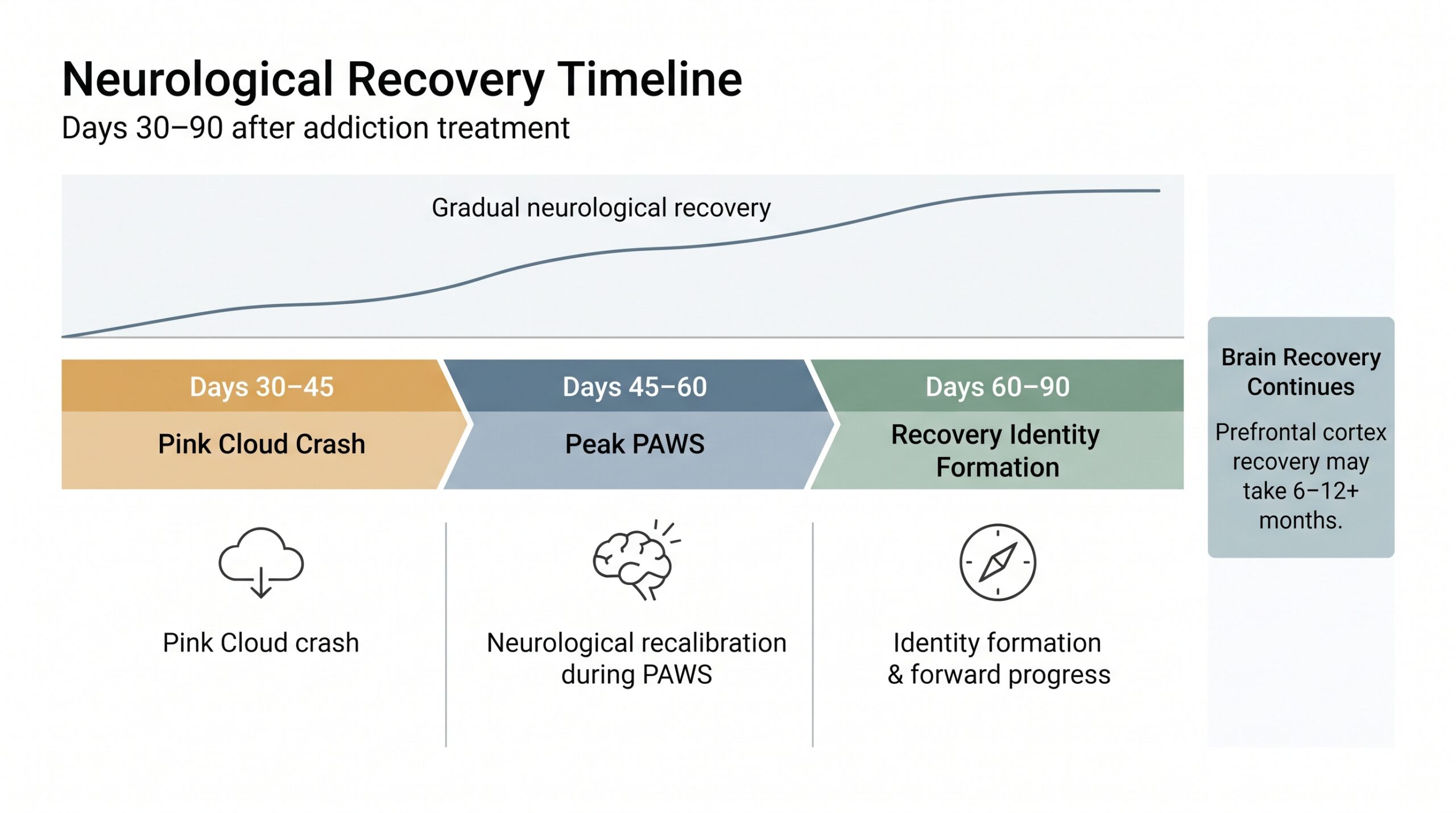
The 30–90 days after leaving residential or intensive treatment involve three overlapping phases: the Pink Cloud crash (days 30–45), peak Post-Acute Withdrawal Syndrome (days 45–60), and recovery identity formation (days 60–90). During this period, the brain continues reversing the neurological damage caused by chronic substance use — but the prefrontal cortex, which governs impulse control and decision-making, does not fully normalize until 6–12 months or beyond. The person leaving a 30-day program is making daily high-stakes decisions with a brain that is still, measurably, compromised.
Most people dramatically underestimate how much happens after discharge. The acute physical crisis of the first two weeks is what families and individuals prepare for. What follows — the emotional surfacing, the cognitive fog, the craving spikes triggered not by active addiction but by a brain still recalibrating — is what actually drives most relapses. Understanding the timeline does not guarantee success. But it removes the confusion and shame that cause people to interpret normal neurological recovery as personal failure.
According to the National Institute on Drug Abuse (NIDA), relapse rates for substance use disorders range from 40 to 60 percent — comparable to other chronic medical conditions such as hypertension and asthma. The majority of those relapses occur within the first year, with the highest concentration in the first 90 days after leaving structured treatment.
Source: NIDA
Days 30–45: The Pink Cloud Effect and the Crash That Follows
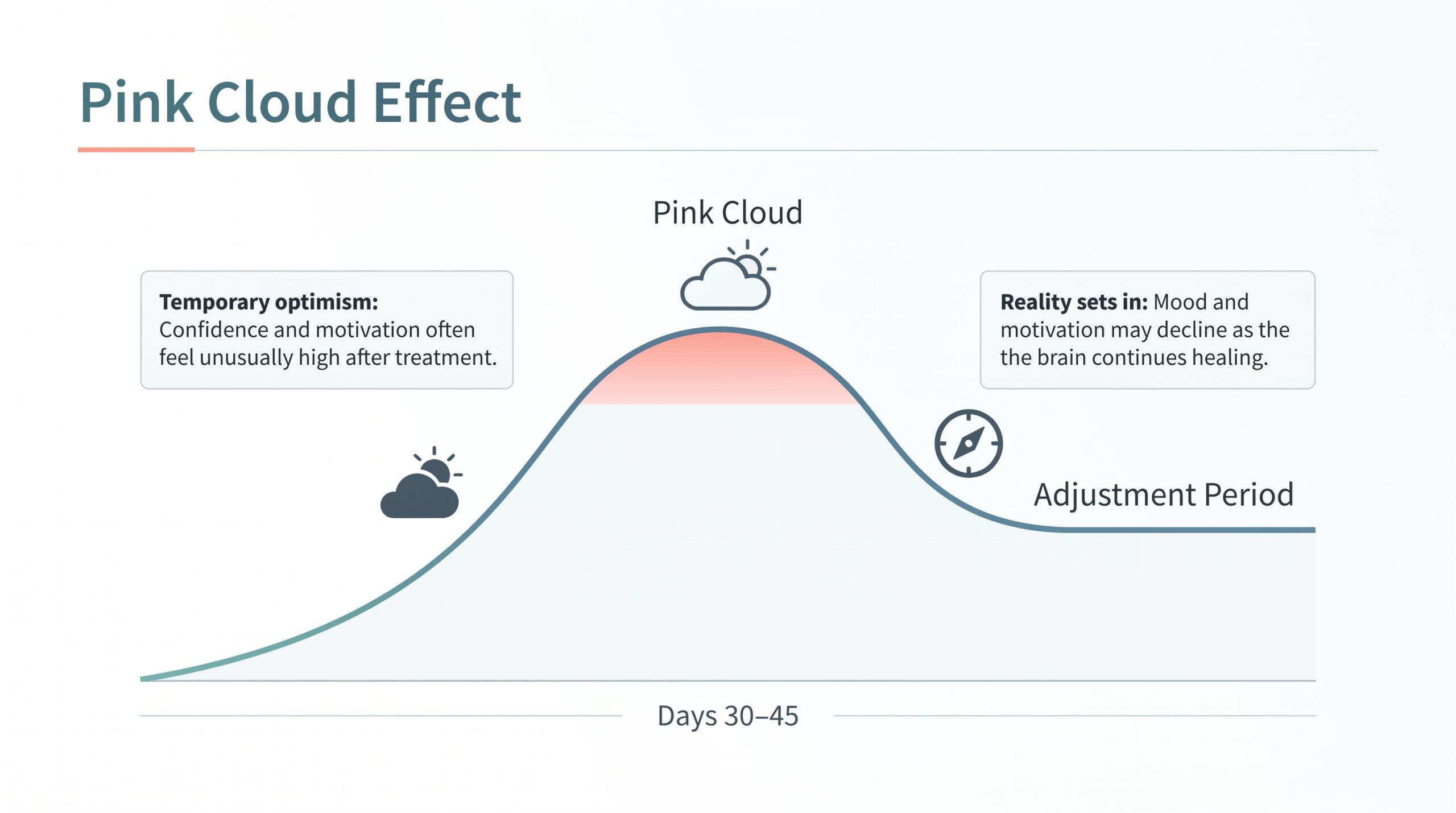
During days 30 through 45 after leaving rehab, many individuals experience “Pink Cloud Syndrome” — a temporary neurological state of heightened optimism and confidence that masks the genuine difficulty of the weeks ahead. When this phase ends, the sudden drop in mood, motivation, and craving resistance is one of the most predictable and most dangerous moments in early recovery. It is the transition almost nobody is adequately prepared for.
What Pink Cloud Syndrome Actually Is
Pink Cloud Syndrome is a documented clinical phenomenon, not a metaphor. After weeks of acute withdrawal and intensive structured treatment, the brain’s reward circuitry — which was suppressed, dysregulated, or flooded by chronic substance use — can temporarily overcorrect. The result is a surge of positive emotion, elevated confidence, and a sense that sobriety feels natural and effortless.
The problem is not the positive emotion itself. The problem is what it masks: the person in the pink cloud phase often stops attending meetings as frequently, reduces their investment in step-down care, and unconsciously concludes that the hard work is behind them. When the phase ends — typically within days to three weeks after the initial euphoria peaks — the crash lands on an individual who has reduced their clinical support precisely at the moment they need it most.
A landmark review of 20 years of continuing care research published in the Journal of Substance Abuse Treatment found that between 40 to 70% of participants leaving residential treatment report some use of alcohol or other drugs within the first six months — and that adding an active continuing care component significantly reduces these rates. Continuing care interventions with longer planned duration and active delivery produced the largest positive effects on long-term sobriety outcomes.
Source: Journal of Substance Abuse Treatment
What Happens When the Pink Cloud Lifts
When the pink cloud dissipates — typically between weeks four and six after leaving residential treatment — the following emerge with clinical predictability:
- Anhedonia: The inability to feel pleasure from activities that were enjoyable before substance use. This is neurologically driven by a dopamine system still recalibrating, not a sign of depression requiring an immediate diagnosis.
- Craving spikes: Environmental cues — people, places, and routines previously associated with use — trigger conditioned cravings that feel physically overwhelming. Outside the structure of treatment, these cues are everywhere.
- Emotional surfacing: Grief, shame, trauma, anxiety, and unresolved anger that substances previously suppressed emerge fully — often without adequate coping tools yet developed enough to process them.
- Overconfidence hangover: The certainty of the Pink Cloud phase gives way to doubt. Individuals who felt certain of their sobriety during the peak are blindsided by the intensity of the crash and frequently misinterpret it as evidence that recovery is not working for them.
What to Do During Days 30–45
- Start step-down care before discharge, not after. A Partial Hospitalization Program (PHP) or Intensive Outpatient Program (IOP) should be scheduled and in motion before the last day of primary treatment. The transition gap is where relapse lives.
- Name the Pink Cloud explicitly with your treatment team. Clients who understand the concept — and know the crash is coming — navigate it significantly better than those who encounter it without warning.
- Anchor non-negotiable daily routines from day one. Sleep schedule, meal timing, physical activity, and meeting attendance should be structural — not aspirational. Structure is a neurological intervention, not a lifestyle preference.
- Identify your three highest-risk environments, people, and time windows. Write them down. Have a specific plan for each before you encounter any of them — not in the moment of encountering them.
Days 45–60: PAWS, Cognitive Fog, and Emotional Volatility
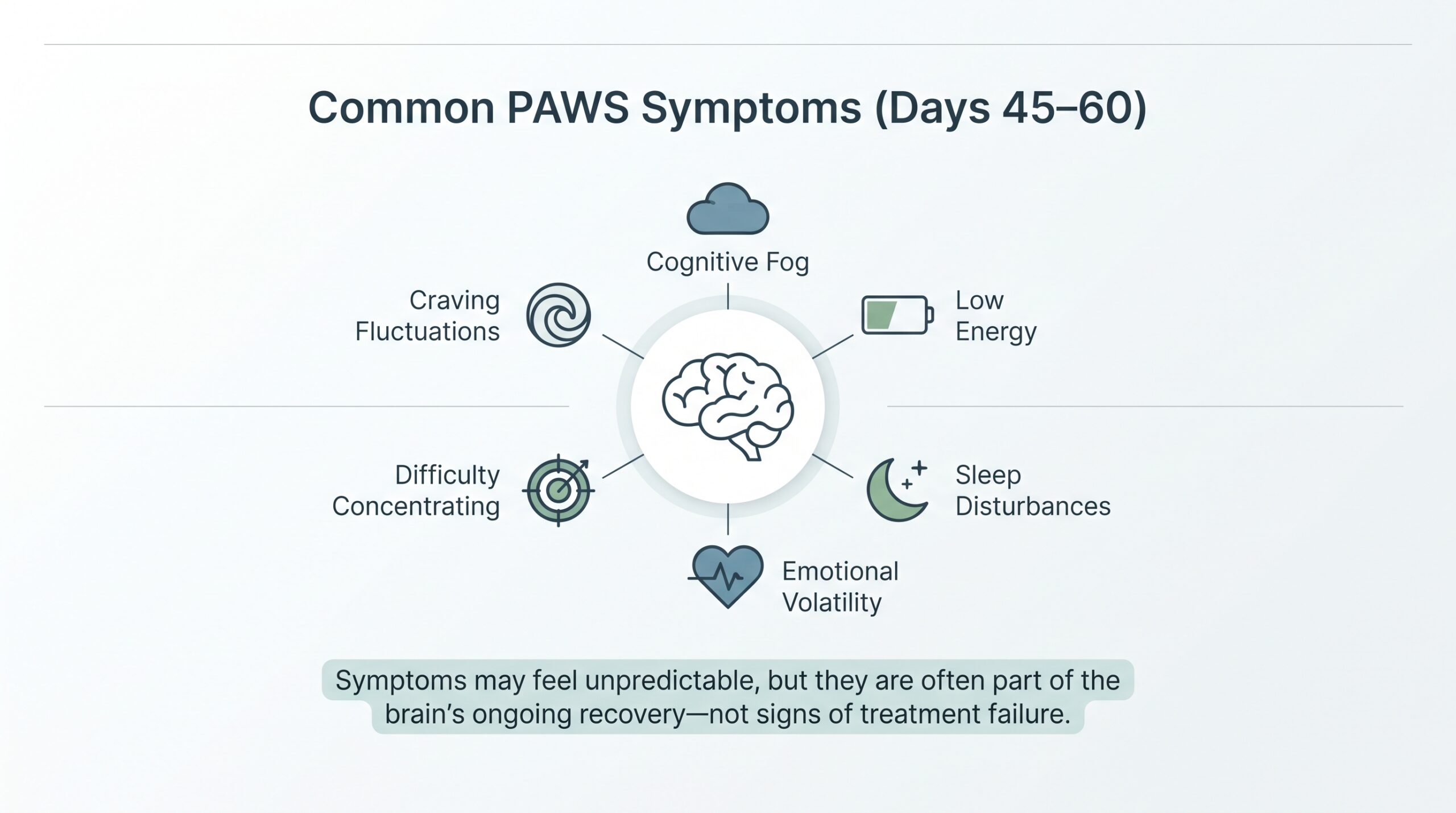
During days 45 through 60, Post-Acute Withdrawal Syndrome (PAWS) is often at its most disruptive. The brain’s dopamine system and stress-response circuitry are still recalibrating — producing a constellation of symptoms that are quieter than acute withdrawal but, in many ways, more dangerous for long-term sobriety because they are unexpected and poorly understood by most people in recovery.
What PAWS Actually Looks Like at Day 45
Acute withdrawal — the dramatic physical symptoms of the first 7–14 days — is what most people and families prepare for. PAWS is different: it fluctuates, it resurfaces unpredictably, and it is frequently misinterpreted as depression, anxiety disorder, or evidence that the person “cannot handle” life without substances. PAWS symptoms at weeks six through eight commonly include:
- Sleep disruption that does not follow a predictable pattern — some nights fine, others completely restless — without a clear trigger
- Difficulty retaining new information, concentrating during therapy, or completing tasks that previously required little effort
- Emotional responses that feel disproportionate to the situation — intense irritability, crying over minor frustrations, or unexpected numbness during meaningful moments
- Waves of intense craving triggered by internal states — loneliness, boredom, fatigue, hunger — rather than obvious environmental cues
- A pervasive sense that “something is wrong” even when nothing concrete is identifiably wrong, which creates anxiety that itself fuels craving
Research published in the Journal of Psychopharmacology found that protracted withdrawal from alcohol — characterized by anxiety, irritability, mood instability, insomnia, and craving — persists well beyond the acute withdrawal timeframe and that “relapse risk remains higher during the first months of treatment” due to these lingering symptoms. A parallel review in Brain Communications confirmed PAWS across opioid, benzodiazepine, and other substance classes, with duration ranging from weeks to months and, in some cases, beyond a year.
Sources: Journal of Psychopharmacology, Brain Communications
What the Brain Is Actually Doing at Day 45
By week six or seven of sobriety, the prefrontal cortex (PFC) — the brain region governing impulse control, planning, and decision-making — shows early, measurable signs of functional recovery. Working memory and inhibitory control are improving. However, the limbic system, which governs emotional response and reward motivation, remains significantly dysregulated. This creates a specific and clinically important disconnect:
The cognitive brain understands, intellectually, why staying sober is the right decision. The emotional brain is still responding to stress, boredom, and environmental cues with the urgency of active addiction. Cognitive Behavioral Therapy (CBT) and Dialectical Behavior Therapy (DBT) skills are critical in this phase precisely because they train the prefrontal cortex to interrupt the limbic response — to insert a measurable gap between trigger and behavior. This is a neurological mechanism, not a motivational exercise, and it requires consistent clinical practice.
Managing PAWS: What the Evidence Supports
- Sleep hygiene as a clinical priority: Sleep deprivation measurably lowers the threshold for craving and impulsive decision-making. A consistent sleep schedule in the 45–60 day window is relapse prevention — not a lifestyle suggestion.
- Aerobic exercise as a dopamine intervention: Even 30 minutes of moderate aerobic activity three times per week has documented effects on dopamine regulation and mood stabilization in early recovery, partially compensating for PAWS-related neurochemical deficits.
- Continued medication management: Individuals on Medication-Assisted Treatment (MAT) should not adjust or discontinue medications during the PAWS window without physician guidance. PAWS symptoms are frequently misread as MAT side effects and drive premature, dangerous discontinuation.
- HALT check-ins, consistently: Being Hungry, Angry, Lonely, or Tired drops craving resistance to its lowest point. Basic self-care at days 45–60 is a documented clinical intervention, not common sense everyone already practices.
Days 60–90: Building a Recovery Identity That Lasts
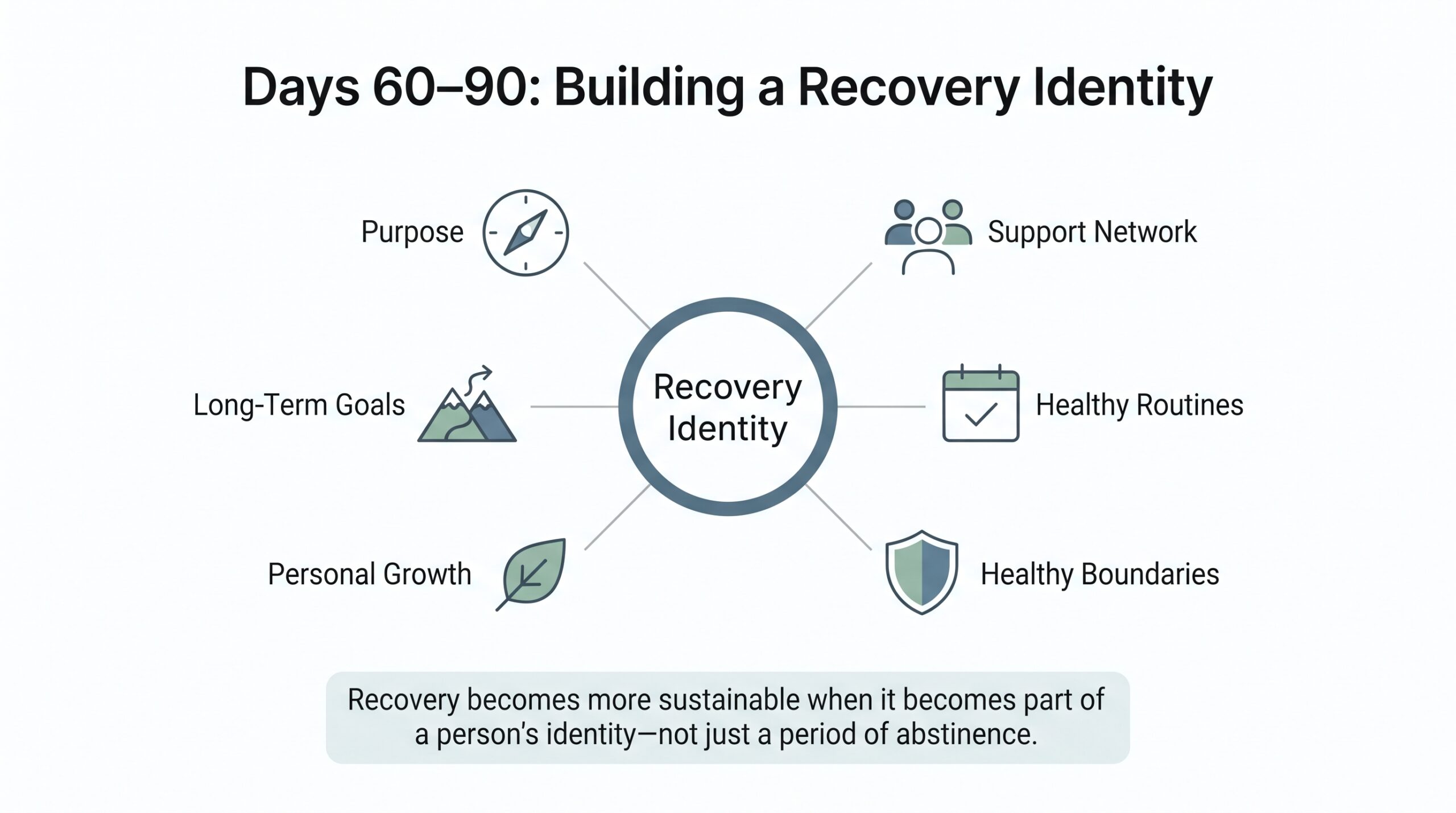
During days 60 through 90, the acute biological crisis of early recovery has largely passed. The central task of this phase is not physical survival — it is identity construction. Building a self-concept as someone in recovery, not merely someone who stopped using, is what the research consistently shows separates individuals who sustain sobriety from those who cycle through repeated treatment episodes without establishing lasting change.
Why Identity Matters More Than Willpower
Behavioral science has largely moved away from willpower as the primary model for sustained behavior change. What replaces it is identity. Research in habit formation consistently shows that individuals who frame sobriety as an expression of who they are — “I’m someone who lives with clarity and intention” — rather than a restriction they endure — “I can’t drink” — show better long-term outcomes meaningfully. The linguistic framing is not incidental. It reflects a genuine shift in self-concept that drives different automatic behaviors.
Days 60–90 are when this identity work becomes neurologically possible. The prefrontal cortex is functional enough to engage in the deeper cognitive restructuring that CBT and narrative therapy facilitate. Peer connections formed in support groups have accumulated enough shared experience to function as genuine relationships rather than clinical assignments. The concept of a recovery community starts to feel like belonging rather than obligation.
SAMHSA reports that approximately 21.2 to 21.5 million adults in the United States have co-occurring mental health and substance use disorders. Among individuals in early recovery, unaddressed anxiety, depression, and PTSD are among the leading predictors of relapse — particularly in the 60–90 day window when clinical contact is typically tapering through the step-down care continuum.
Source: SAMHSA, National Survey on Drug Use and Health (2024)
What to Prioritize in Days 60–90
- Deepen peer support structures: Move from attending meetings to committing to a home group. Secure a sponsor or recovery mentor. The relational element of recovery is not supplemental — it is one of the strongest long-term protective factors identified in the literature.
- Address co-occurring conditions directly: If anxiety, depression, ADHD, or trauma symptoms remain active at day 60, they require dedicated clinical attention — not a “wait and see” approach. Untreated co-occurring disorders are the single most consistent predictor of long-term relapse.
- Rebuild practical life structures: Employment, housing stability, financial planning, and family relationship repair become realistic and necessary focuses in this window. The absence of meaningful purpose and structure at day 90 is a significant relapse risk that clinical programming alone cannot address.
- Plan actively for milestone markers: Counterintuitively, milestone dates — 30 days, 60 days, 90 days — are associated with elevated relapse risk through “graduation thinking”: the unconscious framing of a milestone as a finish line. Plan continued care before the milestone, not after it.
The Step-Down Care Continuum: What It Looks Like and Why Each Level Matters
A 30-day program is a beginning, not a conclusion. NIDA’s clinical guidelines are explicit: most individuals need a minimum of 90 days of treatment to significantly reduce or stop drug use, with better outcomes consistently associated with longer duration and structured step-down programming. The standard continuum following primary treatment is:
| Level of Care | Typical Timing | Hours / Week | Primary Function in the 30–90 Day Window |
|---|---|---|---|
| Partial Hospitalization Program (PHP) | Days 30–45 | 25–30 hrs | Near-residential intensity while sleeping at home or in sober living. Bridges the Pink Cloud window with full clinical structure. |
| Intensive Outpatient Program (IOP) | Days 45–75 | 9–12 hrs | Group and individual therapy 3–4 times per week. Primary clinical support during the PAWS window as independence begins to increase. |
| Standard Outpatient | Days 75–90+ | 1–3 hrs | Weekly or biweekly individual therapy and ongoing psychiatric/MAT management. Appropriate once stability is established and peer support is robust. |
| Peer Support / Community | Day 30 through indefinitely | Variable | 12-Step, SMART Recovery, peer support specialists. Runs concurrently with all clinical levels and continues long after formal treatment ends. |
A systematic review of Intensive Outpatient Programs published in Psychiatric Services found that “moving from more to less intensive treatment on the continuum of care improves client outcomes in general,” with all reviewed studies reporting substantial reductions in alcohol and drug use between baseline and follow-up. The level of evidence for IOP as part of step-down care was classified as high based on quality of trials, diversity of settings, and consistency of outcomes. Continuity of care, not treatment intensity alone, drives long-term recovery outcomes.
Source: Psychiatric Services
Physical Changes You Can Expect in the 30–90 Days After Rehab
During the 30–90 days after leaving rehab, the body undergoes measurable, accelerating physical restoration. Liver enzyme levels continue normalizing. Sleep architecture — severely disrupted in the first two weeks — gradually improves for most individuals. Cognitive clarity increases as the brain restores dopamine receptor sensitivity. These changes are real, measurable, and compounding. They are also nonlinear: two steps forward, one step back is the clinical norm, not a sign that something is wrong.
A timeline of typical physical changes during this window:
- Days 30–45: Energy is inconsistent — good days and bad days without obvious cause. Appetite has largely normalized. Sleep still disrupted for many, especially those in PAWS. Skin hydration and color noticeably improving, particularly in alcohol and stimulant recovery.
- Days 45–60: Liver enzyme markers (ALT, AST) continuing to normalize in alcohol-dependent individuals. GI function stabilizing. Blood pressure often measurably lower in those recovering from alcohol use disorder. Cognitive fog fluctuating — better on some days, frustrating on others.
- Days 60–75: Sleep quality improving with greater consistency. Physical stamina increasing — exercise that was difficult at day 30 is now accessible and beneficial. Weight beginning to stabilize (direction varies by substance and individual nutritional history).
- Days 75–90: Noticeable improvement in concentration and short-term memory. Emotional regulation noticeably more consistent. Physical appearance — skin clarity, eye brightness, posture — markedly changed from day one. Many individuals report feeling, physically, more like themselves than they have in years.
According to research, liver fat content measurably decreases within 2–6 weeks of alcohol abstinence in individuals with alcohol-related fatty liver disease, and liver enzyme markers (ALT, AST) begin normalizing within four weeks for most patients who stop drinking. By weeks eight through twelve, improvement is typically significant and measurable on clinical labs.
Sources: National Library of Medicine, Cleveland Clinic
A critical and underappreciated point about nutrition in this window: chronic substance use causes significant nutritional deficiencies, particularly B vitamins (especially thiamine in alcohol use disorder), zinc, magnesium, and protein. These deficiencies directly affect mood stability, energy, and cognitive recovery. A diet emphasizing whole proteins, complex carbohydrates, healthy fats, and micronutrient-dense foods is not ancillary to recovery at days 30–90 — it is a direct neurological intervention.
What the Research Says About Relapse Risk in the 30–90 Day Window
The 30–90 days after leaving rehab carry the highest relapse risk of any period in the recovery process. Relapse in this window is not random, and it is not a measure of character. Research identifies a specific and consistent set of predictors — understanding them clinically, rather than treating them as moral failures, is what allows individuals and their support networks to intervene before use occurs.
The most evidence-supported relapse triggers in the 30–90 day window:
- Loss of clinical structure at discharge: The single most preventable and most common risk factor. Moving directly from residential treatment to no treatment — without PHP, IOP, or intensive outpatient support — removes the structural floor that protected sobriety while dramatically exposing the individual to full environmental trigger load.
- Untreated co-occurring disorders: Depression, anxiety, PTSD, and ADHD that were previously self-medicated resurface acutely in early recovery. When these conditions go unaddressed after discharge, they become the primary driver of relapse — not craving for the substance itself, but the unbearable discomfort of the underlying condition without a coping mechanism.
- Social isolation: Social connection is not a “nice to have” — it is a documented neurological protective factor. The absence of meaningful peer relationships elevates cortisol, suppresses dopamine, and dramatically increases craving intensity. Isolation is one of the most reliable predictors of relapse across every substance and every demographic.
- Environmental cue exposure without preparation: Conditioned cue-triggered cravings are learned neurological responses, not volitional choices. They are strongest in the 30–90 day window — before behavioral therapy has had sufficient time to build cue-specific coping responses — and they are completely predictable when the individual has not mapped their highest-risk cues and built explicit response plans.
- PAWS misinterpretation: Individuals who experience PAWS symptoms — cognitive fog, mood instability, anhedonia — and do not know what PAWS is frequently interpret these symptoms as evidence that “sobriety doesn’t work for me.” This misinterpretation, not the symptoms themselves, drives the decision to use.
- Overconfidence at milestone markers: Thirty days, sixty days, and ninety days are psychologically significant points that can trigger “graduation thinking” — the unconscious conclusion that a milestone equals completion. Clinicians refer to this as one of the most underappreciated relapse risk factors in the first year.
- HALT states: Being Hungry, Angry, Lonely, or Tired reduces craving resistance to its lowest point. These states are predictable, manageable, and directly addressed by routine — which is why routine is a clinical intervention in this window, not a personality preference.
NIDA notes that relapse rates for substance use disorders range from 40 to 60 percent — comparable to other chronic medical conditions such as hypertension and asthma. This framing is not to normalize relapse but to underscore that it is a clinical event requiring treatment adjustment, not evidence that recovery is impossible.
Source: NIDA, Drug Misuse and Addiction (2026)
A note from our clinical team at Ridgeline Recovery: The individuals we have seen navigate the 30–90 day window most successfully are not those who suffered the least in it. They are those who were most honest about what they were feeling — especially the hard things, the shameful things, the moments of wanting to quit. They asked for help before a moment of crisis rather than after. They showed up to step-down care not because they felt like it, but because they had made a decision before the hard moment arrived. That decision — made in advance, in writing, with a counselor — is what the data consistently shows makes the difference.
How to Build a Relapse Prevention Plan for the 30–90 Day Window
A relapse prevention plan is a written, specific document — not a vague commitment to “stay sober.” It identifies your personal triggers, your escalating warning signs, your coping responses at each stage, and the people you will call before you use, not after. The most effective plans are built before discharge, reviewed in step-down care, and updated every 30 days as recovery evolves. The plan removes decision-making from the moment of highest impairment — which is exactly when decisions about substance use are made.
Evidence-Based Therapies That Drive Relapse Prevention in This Window
- Cognitive Behavioral Therapy (CBT): Identifies the thought patterns that precede cravings and teaches concrete interruption strategies. CBT is among the most researched interventions in addiction treatment, demonstrating effectiveness across alcohol, opioid, stimulant, and cannabis use disorders. It is the primary mechanism for reducing cue reactivity over time.
- Motivational Interviewing (MI): A clinician-guided conversation style that helps individuals articulate their own reasons for sustained change. MI is particularly effective in the 30–60 day window when ambivalence about sobriety is still present even in those who are not using.
- Dialectical Behavior Therapy (DBT) Skills: Distress tolerance, emotional regulation, and interpersonal effectiveness — exactly the competencies most challenged in the PAWS window. DBT gives individuals a procedural toolkit for moments when emotional intensity exceeds their current regulation capacity.
- Trauma-Informed Care: Because unresolved trauma underlies a significant percentage of substance use disorders, trauma-sensitive modalities are increasingly integrated into 30–90 day step-down programming — not deferred to “later” in recovery.
- Mindfulness-Based Relapse Prevention (MBRP): Specifically designed to reduce cue reactivity by training individuals to observe craving as a temporary mental event rather than an imperative requiring a response.
Building Your Written Relapse Prevention Plan: A Step-by-Step Framework
- Map your personal triggers specifically. Not “stress” — but “Sunday evenings when I don’t have plans, I’m tired, and I start thinking about how things used to feel.” Not “bars” — but the specific bar at the specific intersection associated with specific people.
- Identify your early warning signs before use. Relapse is a process, not an event. Warning signs appear days or weeks before use: isolation, skipping meetings, resuming contact with people associated with use, rationalizing “just once,” sleeping too much, stopping medication. Document yours, in writing, with your counselor.
- Build a tiered response protocol. For each warning stage — yellow, orange, red — specify a concrete action. Yellow: call your sponsor or support contact. Orange: call your IOP counselor and attend an additional meeting. Red: call your crisis contact and initiate a return to higher care.
- Create and maintain a 24/7 support contact list. Minimum three people who can be reached at any hour and who know your situation: at least one peer in recovery, one clinical contact, and one trusted family member or close friend.
- Pre-plan your highest-risk time windows. Evenings (especially 6–10 PM), weekends, holidays, and any social situation involving substance access require a specific, written strategy — not improvisation in the moment.
- Define in advance what constitutes an emergency requiring return to higher care. Decide this in writing, with your counselor, before the moment arrives. Remove the decision from a moment of impaired judgment.
- Review and update the plan every 30 days. New triggers emerge. Contact information changes. What was sufficient at day 35 may be inadequate at day 75. A static plan is a deteriorating plan.
Medication-Assisted Treatment (MAT) After Discharge: What to Know
By the 30–90 day window, individuals appropriate for Medication-Assisted Treatment who were stabilized during primary treatment should remain on their medication — and any adjustment or discontinuation should occur in consultation with a prescribing physician, ideally not before 12 months of stable sobriety. Stopping MAT because you “feel better” is one of the most dangerous decisions in early recovery, and one of the most common. Tolerance reduction during abstinence means that a pre-treatment dose of opioids can now be fatal — which is the mechanism behind the majority of post-treatment overdose deaths.
The National Institute on Drug Abuse (NIDA) states that medications for opioid use disorder (MOUD), including buprenorphine and methadone, drastically reduce illicit opioid use, lower overdose mortality, decrease criminal justice involvement, and increase patient retention in treatment. Clinical data show MOUD is profoundly effective and should never be withheld if behavioral services are unavailable or declined by the patient.
Source: NIDA
FDA-Approved MAT Medications in the 30–90 Day Window
| Medication | Targets | Mechanism | Critical Consideration After Discharge |
|---|---|---|---|
| Buprenorphine / Naloxone (Suboxone) | Opioid Use Disorder | Partial opioid agonist; reduces cravings and withdrawal without euphoria | Do not taper without physician guidance in the first 90 days; PAWS symptoms are frequently misread as MAT side effects |
| Naltrexone (Vivitrol) | Opioid & Alcohol Use Disorder | Opioid antagonist; blocks euphoric effect if substances are used | Monthly injection preferred over daily oral for adherence in the 30–90 day window; requires full opioid detox before initiation |
| Acamprosate (Campral) | Alcohol Use Disorder | Reduces PAWS symptoms by stabilizing glutamate signaling | Most effective when abstinence is already established; continue through day 90 and beyond |
| Methadone | Opioid Use Disorder | Full opioid agonist at stabilizing dose; daily clinic dispensing | Dispensed through licensed OTPs; daily clinic structure itself becomes a routine anchor during the 30–90 day window |
How Families Can Support Someone in the 30–90 Days After Rehab
Family members play a measurable role in recovery outcomes during the 30–90 day window. Research consistently shows that social support — particularly from family — is among the strongest predictors of treatment retention and long-term sobriety. However, the nature of that support matters as much as its presence. Enabling behaviors, high-conflict communication, and enmeshed boundaries consistently undermine recovery, even when they are motivated entirely by love. The most effective family support in this window is structured, boundaried, and clinically informed.
Evidence-based ways families can support recovery in the 30–90 day window:
- Expect and prepare for emotional volatility — without internalizing it. PAWS-driven mood swings in weeks four through eight are neurologically driven, not relational statements. Preparing for them in advance — ideally in family therapy before discharge — protects relationships through one of the hardest stretches of early recovery.
- Remove access to substances from any shared living environment. This includes alcohol, prescription medications not prescribed to the individual in recovery, and any paraphernalia. This is a concrete, immediate, non-negotiable action.
- Participate in family therapy when offered. Treatment programs that include structured family therapy components have documented better retention and outcome rates than those that address only the individual.
- Learn the CRAFT model. Community Reinforcement and Family Training is an evidence-based approach that teaches family members how to support recovery through positive reinforcement and healthy boundary-setting — without ultimatums, confrontation, or enabling.
- Rebuild trust incrementally, not immediately. Trust is rebuilt through consistent behavior demonstrated over time, not through the fact of leaving rehab. Moving too quickly on trust — restoring financial access, autonomy, or social freedoms before they are clinically warranted — creates conditions the individual may not yet be ready for.
- Engage your own clinical support. Secondary trauma, burnout, and enabling are nearly universal in families affected by addiction. Al-Anon, Nar-Anon, and therapist-guided family support are not optional extras — they are part of the same treatment system serving the same recovery.
A randomized controlled trial found that the CRAFT model was effective in engaging treatment-refusing individuals in formal treatment in 64–74% of cases — significantly outperforming Al-Anon alone (13%) and traditional confrontational intervention (30%) in getting loved ones to enter and stay in treatment.
Sources: Pyramid Healthcare, The Nestled Recovery
Ridgeline Recovery: Supporting Your Recovery from Day 30 Through Day 90 and Beyond
At Ridgeline Recovery in Columbus, Ohio, we provide comprehensive, evidence-based treatment across every level of the care continuum — from initial clinical assessment through Partial Hospitalization, Intensive Outpatient, and long-term aftercare and peer support. We accept most major insurance plans, including Ohio Medicaid.
The research is clear that the first 90 days after leaving primary treatment require structured clinical support — not willpower alone. If you or someone you love is navigating the 30–90 day window, our clinical team is ready to build a step-down plan that matches what you actually need, whether that is PHP, IOP, MAT management, or a combination of all three. A 90 day rehab continuum is not a luxury — it is the clinical standard that the evidence consistently supports.
Frequently Asked Questions
How long does it take to feel normal after leaving rehab?
Most people begin to feel functionally stable — consistent sleep, more regulated mood, reduced craving frequency — between weeks eight and twelve after leaving residential treatment. However, full neurological recovery from heavy substance use typically takes 6–12 months or longer, depending on substance, duration of use, and individual biology. Expecting to feel normal by day 30 is one of the most common and damaging misconceptions in early recovery. The 30–90 day window is a period of active neurological healing, not a finish line.
What is the highest-risk period for relapse after rehab?
The 30–90 day window after leaving residential treatment is consistently identified as the highest-risk period for relapse. This window combines loss of clinical structure, peak PAWS symptoms, full return to environmental triggers, and the neurological aftermath of the Pink Cloud phase — simultaneously. The presence of any structured continuing care (PHP, IOP, MAT, peer support) in this window is among the strongest predictors of sustained sobriety.
Is it normal to feel worse after leaving rehab than during it?
Yes, and it is clinically expected. Inside residential treatment, the environment is controlled, triggers are minimized, and clinical support is constant. After discharge, the individual reencounters their full life while still in a neurologically vulnerable state. The discomfort, emotional intensity, and craving spikes that emerge in weeks four through eight after leaving treatment are not signs of failure — they are the predictable result of that re-exposure, and they are precisely what step-down care is designed to support.
What is PAWS and how long does it last after rehab?
Post-Acute Withdrawal Syndrome (PAWS) is the cluster of neurological symptoms that persist after acute withdrawal resolves: cognitive fog, mood instability, sleep disruption, anhedonia, and variable craving intensity. Unlike acute withdrawal, PAWS symptoms fluctuate unpredictably rather than following a linear trajectory. Duration varies by substance: alcohol-related PAWS can persist up to two years in severe cases; opioid PAWS typically four to six months; stimulant PAWS three to six months. PAWS symptoms are neurological — not psychological weaknesses — and respond to clinical support, medication management, exercise, and consistent sleep and nutrition.
Should I continue MAT (Suboxone, Vivitrol, etc.) after leaving rehab?
Yes. If you were stabilized on FDA-approved MAT during primary treatment, continuing that medication after discharge is the evidence-based standard of care. Discontinuing MAT during the 30–90 day window — because you “feel better” — is one of the most dangerous decisions in early recovery. Tolerance reduction during abstinence means a pre-treatment dose of opioids can now be fatal. Any tapering or discontinuation should occur in close consultation with a prescribing physician, ideally after 12 or more months of stable sobriety, not in the first 90 days.
What is a PHP or IOP and do I need one after a 30-day program?
A Partial Hospitalization Program (PHP) provides 25–30 hours of structured clinical programming per week while the individual lives at home or in sober living. An Intensive Outpatient Program (IOP) provides 9–12 hours per week of group and individual therapy. Both are evidence-based levels of care that bridge the gap between residential treatment and fully independent recovery. Clinical evidence consistently shows that individuals who transition from residential treatment into PHP or IOP have significantly better 12-month outcomes than those who move directly to no treatment. The question is not whether you need continuing care — it is which level your clinical picture requires.
What should someone do if they relapse after leaving rehab?
A relapse after leaving rehab is a clinical event, not a moral failure, and it does not erase prior progress. The appropriate immediate response is to stop use as quickly as possible, contact a clinical support person immediately, and seek a return to a higher level of care. NIDA explicitly frames relapse as equivalent to a symptom recurrence in any other chronic medical condition — it signals that the treatment plan needs adjustment, not that recovery is impossible. The most dangerous response to relapse is shame-driven isolation. The most protective response is immediate return to clinical contact.
What is the Pink Cloud effect in recovery and why is it dangerous?
Pink Cloud Syndrome is a documented neurological phenomenon in early recovery in which the brain’s reward circuitry temporarily overcorrects after substance use cessation, producing a surge of positive emotion, elevated confidence, and a sense that sobriety feels effortless. It typically occurs in the first four to six weeks after leaving residential treatment. It is dangerous not because it feels good, but because it leads individuals to reduce their investment in step-down care and peer support — precisely at the moment that structure is most critical. When the pink cloud lifts, the crash lands on a person who has voluntarily reduced their safety net.
How can families best support someone in the 30–90 days after rehab?
The most effective family support in the 30–90 day window is structured, boundaried, and clinically informed — not permissive or conflict-driven. Key evidence-based actions: remove all substances and paraphernalia from shared living spaces; participate in family therapy if offered through the step-down program; learn the CRAFT model for evidence-based boundary-setting; prepare for emotional volatility without internalizing it as a relational failure; and engage your own support system — Al-Anon, Nar-Anon, or a therapist — concurrently with supporting your loved one.
Ready to Build a Life That Lasts After Rehab?
Ridgeline Recovery guides individuals through the critical 30–90 day window with PHP, IOP, MAT management, and peer support — every step-down plan built around your needs, not a one-size-fits-all protocol. CARF-accredited. 90 day rehab continuum. Ohio Medicaid accepted.
CARF-Accredited · Medicaid Accepted · Evidence-Based Care · 100% Confidential
Call or Text: (614) 618-5000
Andy Danec
Clinic Director · Ridgeline Recovery
Andy Danec founded Ridgeline Recovery in 2022 with a mission to radically change as many lives as possible. Recognizing that lasting recovery requires personalized, evidence-based care — not a one-size-fits-all program — Andy built a clinical team focused on collaboration, transparency, and long-term client well-being across every level of the care continuum.
About Ridgeline Recovery
Columbus, Ohio’s trusted specialist in addiction treatment and mental health care, offering PHP, IOP, MAT, and long-term aftercare. CARF-accredited and built on a foundation of compassionate, personalized recovery support.
Office Address: 491 Georgesville Rd, Columbus, OH 43228
Sources & References
- Cleveland Clinic. (2025, April 14). Alcohol withdrawal: Symptoms, causes, and treatment. Cleveland Clinic Health Library. https://my.clevelandclinic.org/health/diseases/alcohol-withdrawal
- National Institutes of Health. (2009). Continuing care research: What we’ve learned and where we’re going (PMID 19161894). Journal of Substance Abuse Treatment. https://pubmed.ncbi.nlm.nih.gov/19161894/
- National Institutes of Health. (2014). The role of the central amygdala in drug addiction (PMC4152944). National Center for Biotechnology Information. https://pmc.ncbi.nlm.nih.gov/articles/PMC4152944/
- National Institutes of Health. (2015). Neurocircuitry of addiction (PMC4553654). National Center for Biotechnology Information. https://pmc.ncbi.nlm.nih.gov/articles/PMC4553654/
- National Institutes of Health. (2016). Facing addiction in America: The Surgeon General’s report on alcohol, drugs, and health (Report No. NBK424859). U.S. Department of Health and Human Services. https://www.ncbi.nlm.nih.gov/books/NBK424859/
- National Institutes of Health. (2020a). The recognition and management of protracted alcohol withdrawal (PMID 32648800). Journal of Psychopharmacology. https://pubmed.ncbi.nlm.nih.gov/32648800/
- National Institutes of Health. (2020b). Digital health interventions for substance use disorders (PMC7425303). National Center for Biotechnology Information. https://pmc.ncbi.nlm.nih.gov/articles/PMC7425303/
- Pyramid Healthcare. (2021, March 10). What should I know about the CRAFT intervention model? Pyramid Healthcare Blog. https://www.pyramid-healthcare.com/blog/2021/03/10/what-should-i-know-about-the-craft-intervention-model/
- Ridgeline Recovery. (2026). First 30 days of recovery: What to expect. Ridgeline Recovery Center. https://ridgelinerecovery.com/first-30-days-of-recovery-what-to-expect/
- ScienceDirect. (2011). Neurobiological mechanisms of addiction and active recovery. Journal of Substance Abuse Treatment, 41(2), 115–124. https://www.sciencedirect.com/science/article/abs/pii/S1755296611000317
- Substance Abuse and Mental Health Services Administration. (2026). Data and statistics portal. U.S. Department of Health and Human Services. https://www.samhsa.gov/data
- The Nestled Recovery. (2025, August 4). How to convince someone to go to rehab. The Nestled Recovery Boutique Rehab Blog. https://thenestledrecovery.com/rehab-blog/how-to-convince-someone-to-go-to-rehab/
- U.S. National Institute on Drug Abuse. (2018). Principles of drug addiction treatment: A research-based guide (3rd ed.) [PDF file]. National Institutes of Health. https://archives.nida.nih.gov/publications/principles-drug-addiction-treatment-research-based-guide-third-edition
- U.S. National Institute on Drug Abuse. (2026a). Addiction science: Drugs, brains, and behavior. National Institutes of Health Research Topics. https://nida.nih.gov/research-topics/addiction-science/drugs-brain-behavior-science-of-addiction
- U.S. National Institute on Drug Abuse. (2026b). Drug misuse and addiction. National Institutes of Health Series. https://nida.nih.gov/publications/drugs-brains-behavior-science-addiction/drug-misuse-addiction
- U.S. National Institute on Drug Abuse. (2026c). Medications for opioid use disorder. National Institutes of Health Research Topics. https://nida.nih.gov/research-topics/medications-opioid-use-disorder