
TL;DR
- Inpatient rehab is best for those needing a safe, 24/7 sanctuary away from triggers.
- Outpatient rehab (PHP/IOP) is ideal for those with strong support systems who need to balance treatment with work or family.
Both paths at Ridgeline Recovery utilize MAT and clinical support to ensure your recovery fits your unique life.
Deciding to seek help for a substance use disorder is a life-changing moment. However, once that decision is made, many families in Central Ohio find themselves at a crossroads: inpatient vs outpatient rehab. Which one offers the best chance at long-term sobriety?
At Ridgeline Recovery, we understand that no two journeys are the same. The right choice depends on the severity of the addiction, your medical history, and your daily responsibilities. This comprehensive guide breaks down the clinical and logistical differences to help you move forward with confidence.
Understanding the Core Differences: Inpatient vs Outpatient Rehab
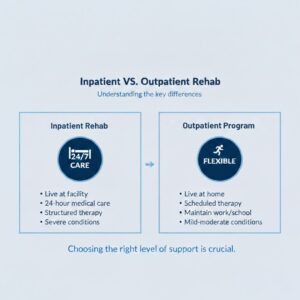
The primary distinction between these two levels of care is the environment and intensity.
What is Inpatient Rehab?
Inpatient rehab, also known as residential treatment, requires patients to live on-site at a specialized facility. It offers 24/7 medical and clinical supervision. In an inpatient setting, every hour of the day is structured, focusing entirely on healing without the distractions or triggers of the outside world.
What is Outpatient Rehab?
Outpatient rehab allows individuals to receive professional treatment while living at home. Depending on the intensity, such as a Partial Hospitalization Program (PHP) or an Intensive Outpatient Program (IOP), patients visit the center for several hours a day or week but return to their own beds at night.
The Pros and Cons of Inpatient Treatment
When weighing inpatient vs outpatient rehab, it is important to consider the clinical advantages of a residential setting.
The Benefits:
-
Constant Supervision: For those at high risk of relapse or medical complications, 24-hour care is often a necessity.
-
Removal of Triggers: By physically leaving an environment where substance use occurred, patients can reset their brain chemistry in a safe, drug-free zone.
-
Peer Community: Living with others who are on the same journey fosters a unique sense of accountability and brotherhood/sisterhood.
The Challenges:
-
Time Commitment: It requires a total leave of absence from work, school, and family duties.
-
Cost: Because it includes room and board, inpatient care is typically more expensive than outpatient alternatives (though many insurance plans, including Ohio Medicaid, may cover it).
The Pros and Cons of Outpatient Treatment
For many in the Columbus area, outpatient care is the most realistic path to recovery, offering a blend of professional support and personal freedom.
The Benefits:
-
Flexibility: You can maintain your job, attend school, and care for your children while receiving treatment.
-
Real-World Application: You learn a coping skill in group therapy in the morning and can practice it in your real life that evening.
-
Lower Cost: Without the overhead of residential living, outpatient programs are more affordable. At Ridgeline Recovery, we specialize in making these programs accessible through Medicaid and Medicare.
The Challenges:
-
Access to Triggers: Since you aren’t in a locked facility, you remain in proximity to the stresses and people that may have contributed to your addiction.
-
Required Discipline: Outpatient care requires a high level of self-motivation to attend every session and stay sober outside of clinical hours.
Levels of Outpatient Care: PHP vs. IOP
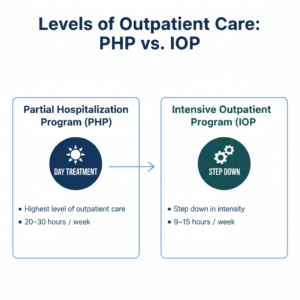
When people search for inpatient vs outpatient rehab, they often discover that outpatient care isn’t a single thing. It exists on a spectrum:
-
Partial Hospitalization Program (PHP): Often called Day Treatment, this is the highest level of outpatient care. It usually involves 20–30 hours of therapy per week. It’s ideal for those who need intensive medical monitoring but have a safe home to return to.
-
Intensive Outpatient Program (IOP): This is a step down in intensity. Our IOP in Columbus typically meets for 9–15 hours a week. It focuses heavily on relapse prevention and life skills.
Financial Considerations: Medicaid and Insurance in Ohio
A major factor in the inpatient vs outpatient rehab decision is cost. In Ohio, the landscape for addiction treatment has changed significantly in recent years.
-
Ohio Medicaid: Covers a wide range of services, including MAT (Medication-Assisted Treatment), individual counseling, and intensive outpatient services.
-
Private Insurance: Most private plans are required by law to provide Mental Health Parity, meaning they must cover addiction treatment similarly to how they cover physical ailments.
Note: Ridgeline Recovery is committed to removing financial barriers. We are a leading provider of Medicaid-eligible addiction services in Columbus, ensuring that high-quality care isn’t reserved only for those who can pay out-of-pocket.
Decision Checklist: Which Path Should You Take?
To help you decide between inpatient vs outpatient rehab, consider these five factors:
-
History of Relapse: Have you tried outpatient care before and found it difficult to stay sober? If so, inpatient might be the necessary next step.
-
Medical Necessity: Do you require medical detox for alcohol or benzodiazepines? These often require an inpatient start for safety.
-
Support System: Do you have a supportive, sober family at home? If yes, outpatient care like an IOP can be highly effective.
-
Career/Legal Obligations: Do you have FMLA protection to take 30 days off, or must you keep working to support your family?
-
Dual Diagnosis: Do you also struggle with severe depression, PTSD, or bipolar disorder? A more intensive, structured environment often yields better results for co-occurring disorders.
Why Choose Ridgeline Recovery in Columbus, OH?
At Ridgeline Recovery, we don’t just provide a service. We build a foundation. Our Columbus facility offers a continuum of care. This means we can help you transition from intensive programs into long-term maintenance, ensuring you never feel abandoned in your journey.
We specialize in MAT, which is proven to increase the success rates of outpatient programs by reducing the intense cravings that lead to relapse.
Take the First Step Today
The battle of inpatient vs outpatient rehab doesn’t have to be fought alone. Our admissions team is ready to conduct a free, confidential assessment to determine which level of care fits your life.
Ready to start? Verify your insurance or call our Columbus office today to speak with a recovery specialist.